Integrating Instant Payments with Live Dealer Sessions on Portable Devices
Written by Nils Franke · Jun 29, 2026

Integrating Instant Payments with Live Dealer Sessions on Portable Devices
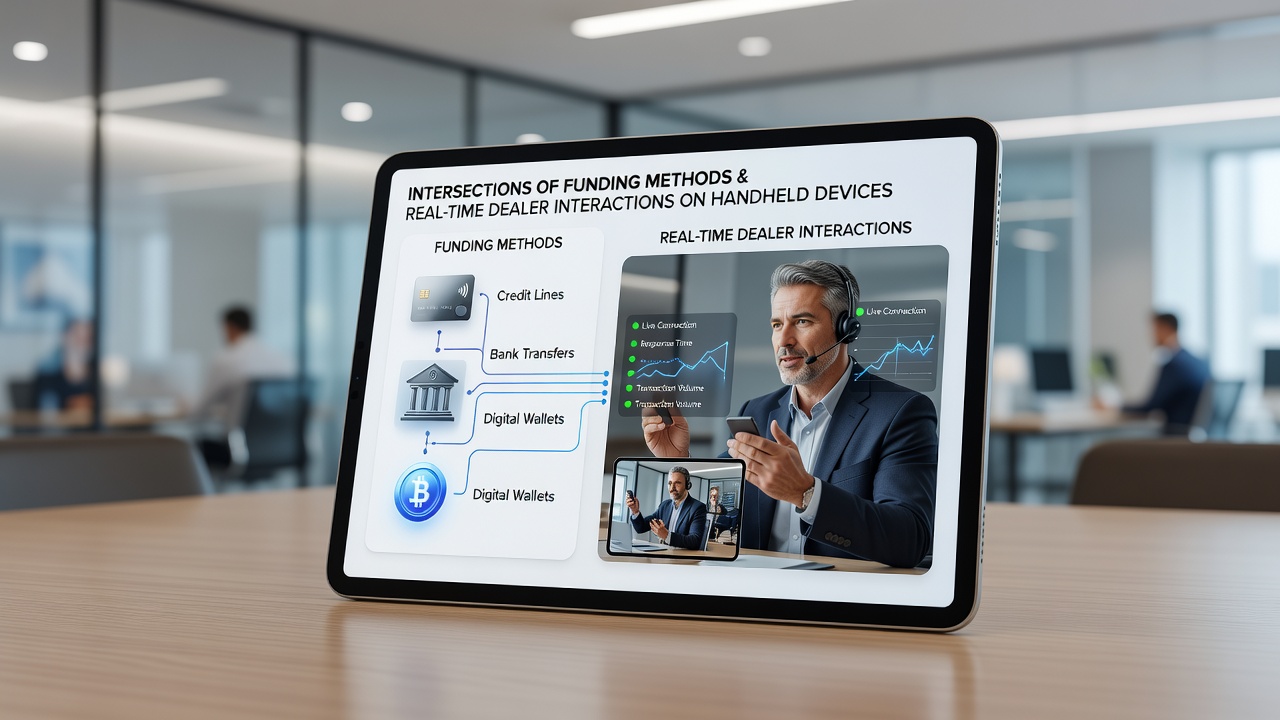
Handheld devices now serve as primary platforms where funding methods intersect directly with real-time dealer interactions, creating continuous play cycles that link deposits to ongoing table sessions without interruption. Operators report that users initiate transactions mid-round in games such as blackjack and roulette, with systems processing funds while dealers maintain engagement through video streams.
Core Mechanics of Payment and Dealer Synchronization
Modern applications embed payment gateways that activate within the same interface as live dealer feeds, allowing deposits via digital wallets or bank transfers to complete in seconds and immediately reflect in game balances. This setup means a player facing a low balance can authorize a transfer, receive confirmation, and resume betting before the next card or wheel spin occurs, all on a single screen. Research from industry analysts shows that synchronization protocols reduce latency between transaction approval and dealer acknowledgment to under three seconds in optimized networks.
Developers incorporate API connections that notify dealers of updated stakes automatically, so adjustments appear on their terminals without manual input from players. Those who have examined these systems note that encryption layers protect both financial data and video feeds simultaneously, maintaining compliance across jurisdictions that require separate verification for each element.
Regional Developments in June 2026
By June 2026, several North American and European markets expanded regulations permitting instant funding tied to live sessions on mobile networks. Data from the New Jersey Division of Gaming Enforcement indicates mobile live dealer volume grew alongside payment integration upgrades, with operators updating platforms to handle simultaneous transaction and interaction streams. Similar patterns emerged in Canadian provinces where provincial oversight bodies approved enhanced mobile frameworks that support real-time dealer visibility during funding events.
Technical Infrastructure Supporting the Overlap
Cloud-based servers manage both payment ledgers and video distribution, routing data packets through shared channels that prioritize low delay for dealer responses while validating financial inputs. Hardware on handheld devices includes dedicated processors that handle encryption for payments and video decoding in parallel, preventing one process from stalling the other. Observers note that 5G rollout accelerated these capabilities, delivering consistent performance even during peak hours when multiple users engage live tables and execute transfers at once.
Software updates released in early 2026 introduced unified dashboards where balance indicators update live as dealers proceed with rounds, eliminating the need to switch applications. This design keeps participants engaged with the dealer while funding remains active in the background.
Security Protocols at the Intersection
Multi-factor authentication combines with biometric checks to secure funding actions without pausing dealer interactions, as facial or fingerprint scans occur locally on the device. Regulatory frameworks from bodies such as the ACT Gambling and Racing Commission require audit trails that log both payment timestamps and dealer actions within the same session record. These logs help verify that transactions align with game outcomes and player requests in real time.
Encryption standards applied to video streams now extend to payment metadata, creating a single secure tunnel rather than separate connections that could introduce vulnerabilities. Studies from gaming technology firms reveal that unified security reduces breach risks by consolidating monitoring points.
Player Interface Adaptations
Interface layouts position funding buttons adjacent to betting controls, enabling quick access while the dealer remains visible in a primary window. Adaptive designs resize elements based on device orientation, keeping live feeds prominent during portrait or landscape use when transactions process. Experts have observed that such arrangements maintain dealer eye contact and table focus even as payment notifications appear briefly in secondary overlays.
Voice commands and gesture controls further integrate these functions on newer device models, allowing users to authorize deposits verbally without lifting attention from the live stream. This approach suits environments where manual input might disrupt concentration on dealer cues.
Future Integration Trends
Emerging standards from international gaming associations emphasize interoperability between payment processors and dealer platforms, aiming for cross-device consistency by late 2026. Testing phases currently underway explore blockchain elements for transaction verification that could run alongside dealer randomization without added latency.
Conclusion
Handheld technology continues to merge funding methods with live dealer interactions through synchronized systems, regional regulatory support, and refined interfaces. These developments produce measurable efficiencies in session continuity as documented across multiple markets in June 2026.